Connect the promised date, fulfillment status and customer-support response before trying to sell faster shipping.

A shopper buys a gift because the product page says it can arrive in time. The order confirmation then says something different. When the parcel stalls, the support assistant links to tracking that the shopper already checked. Each system has done its own small job; the customer still has an unresolved deadline.
Locus’s November 10, 2026 release describes a survey of 1,000 U.S. consumers: 54% recalled abandoning a cart because arrival timing was uncertain; 40% prioritized delivery certainty versus 8% speed. These are vendor-commissioned, self-reported preferences and recollections. They do not establish a conversion lift from adding dates.
The practical opportunity is to test a more reliable promise-and-recovery journey. Here is a fictional gift-order example you can adapt to your store.
1. Write down the promise the shopper actually saw
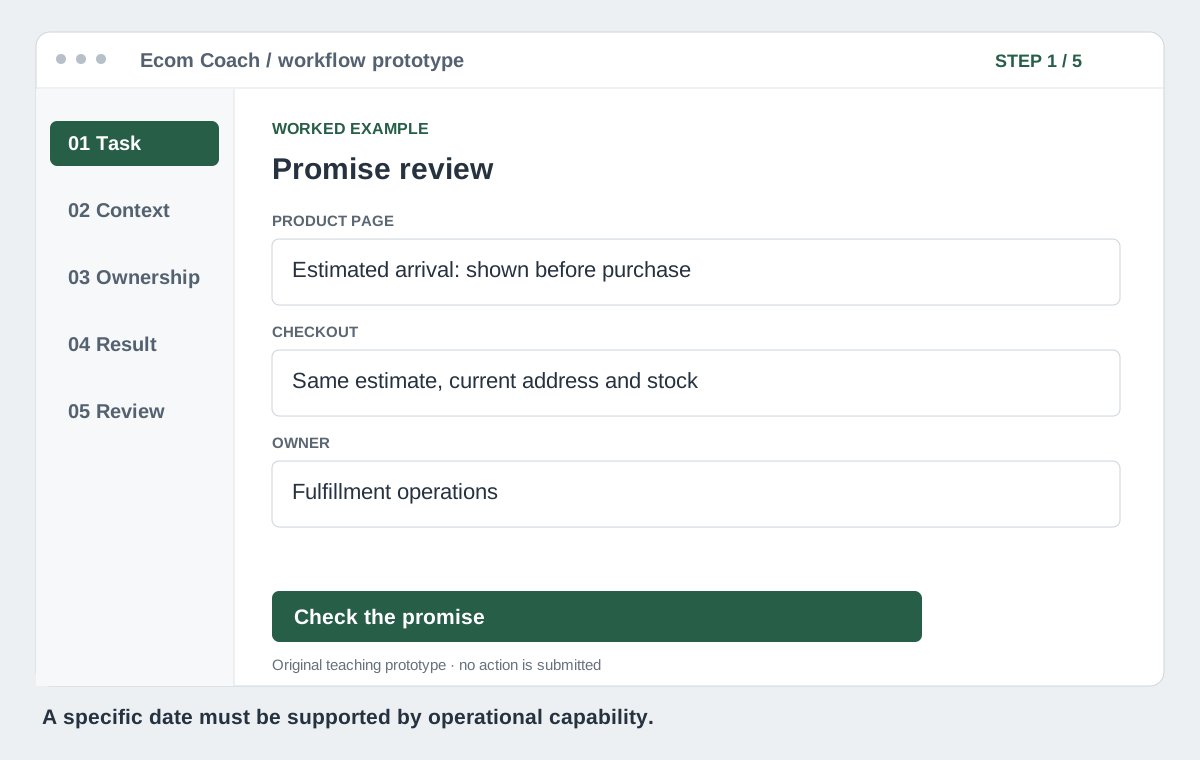
Audit one product and one shipping region across product page, cart, checkout, confirmation and help content. Capture the date range, timezone, order cutoff, handling time and exceptions. Decide which system is authoritative and who maintains it.
Show a realistic estimate when that is all operations can support. Do not promote a guaranteed arrival date merely because a survey says people like certainty. If a guarantee exists, explain its conditions and remedy where the shopper decides.
2. Carry the promise into the order record
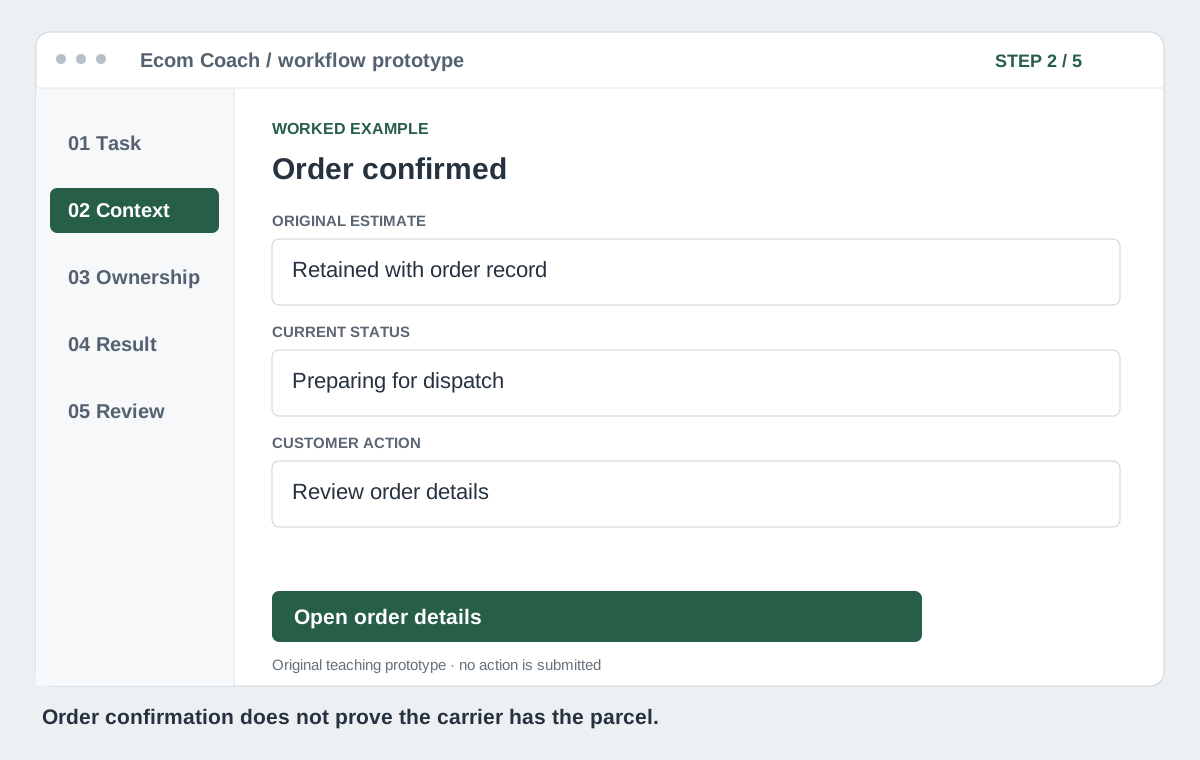
Preserve what was offered when the order was placed, alongside the current fulfillment state. Support needs to distinguish a changed estimate from a missed original promise. A live product page alone cannot reconstruct yesterday’s customer expectation.
Verify the order and the customer before exposing details. For an agent-assisted purchase, make the address, service and total cost reviewable before payment. Keep order placement separate from carrier acceptance.
3. Define the exception before the apology
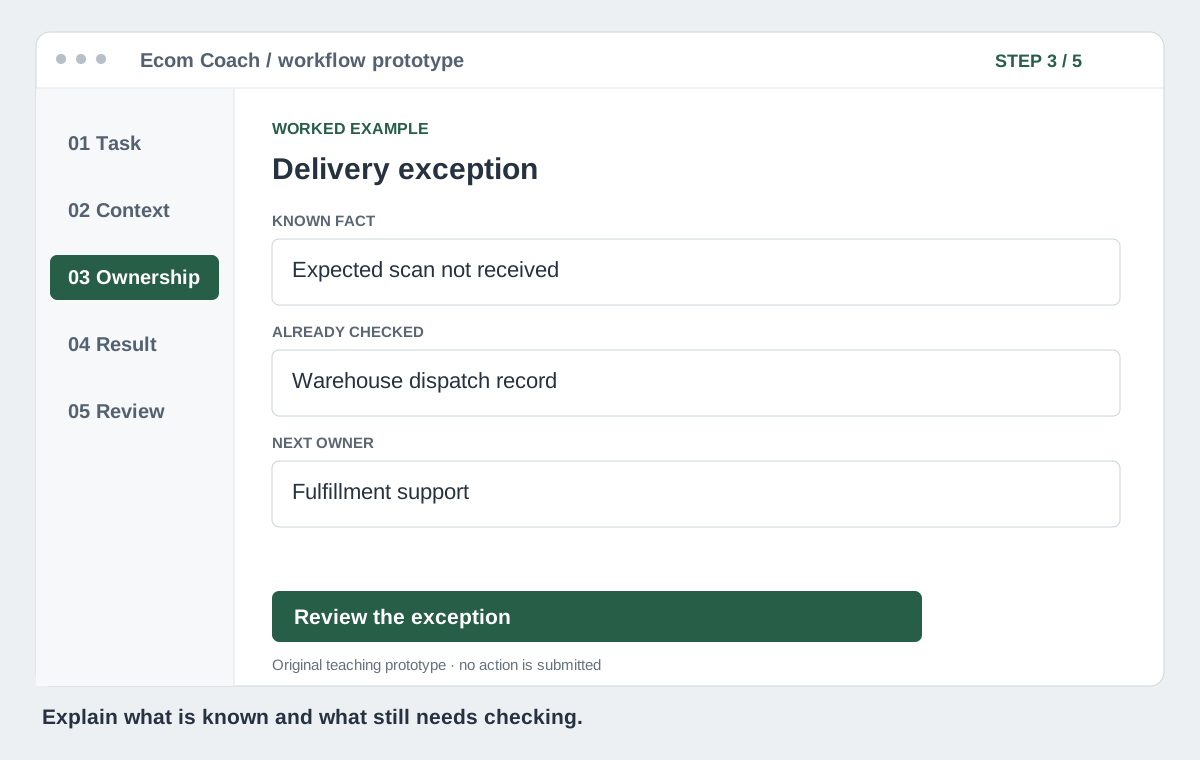
Choose an actionable trigger: for example, no carrier scan by an operationally defined cutoff. Avoid treating every delay as the same incident. The next useful action might be an inventory check, carrier investigation or a customer choice.
Create a case containing the promised date, actual status, checks already performed and the available remedies. Set a responsible team and a realistic update commitment. Send a proactive message only when you have a meaningful status or decision to communicate.
4. Offer an authorized choice and confirm its result
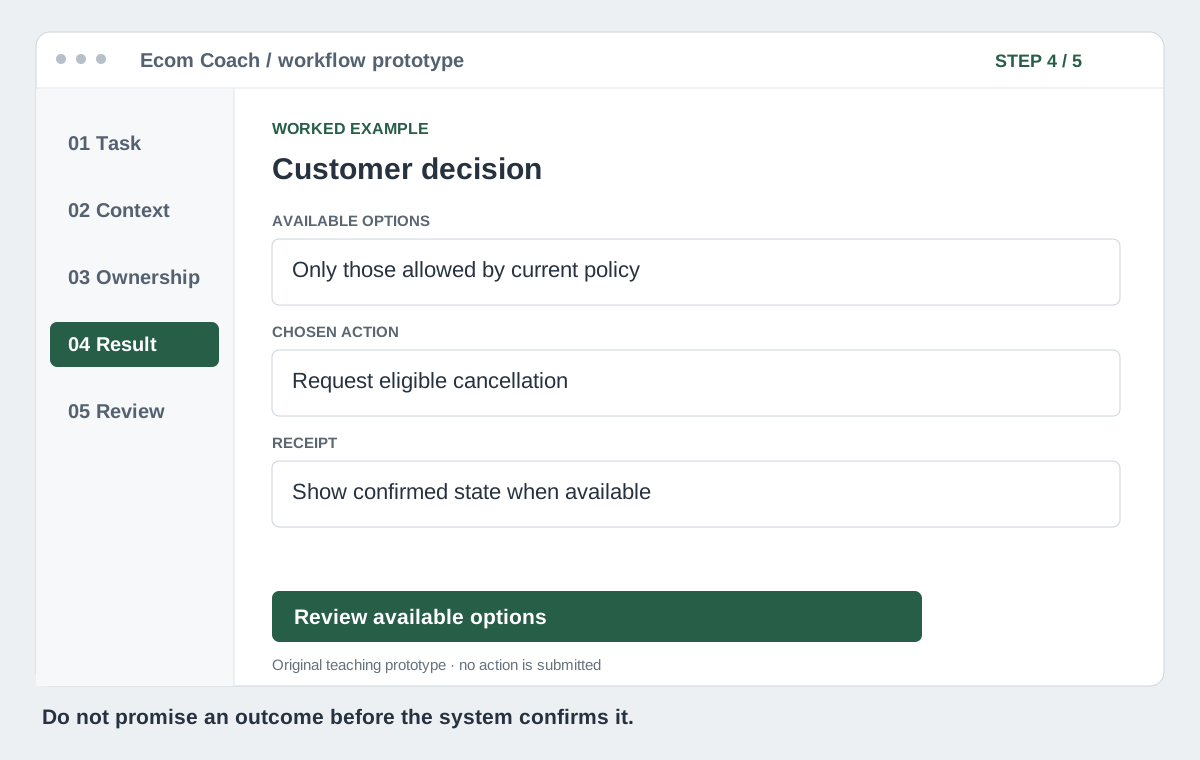
If the gift deadline is at risk, show only remedies the business can actually deliver. A replacement, cancellation or revised arrival expectation should include eligibility, costs and consequences. Do not make the assistant invent a refund policy.
When the customer chooses, confirm the resulting order state from the relevant system. A refund request is not a settled refund. A replacement request is not a dispatched parcel. Keep the same case history if the first remedy fails.
5. Measure kept promises and retained margin
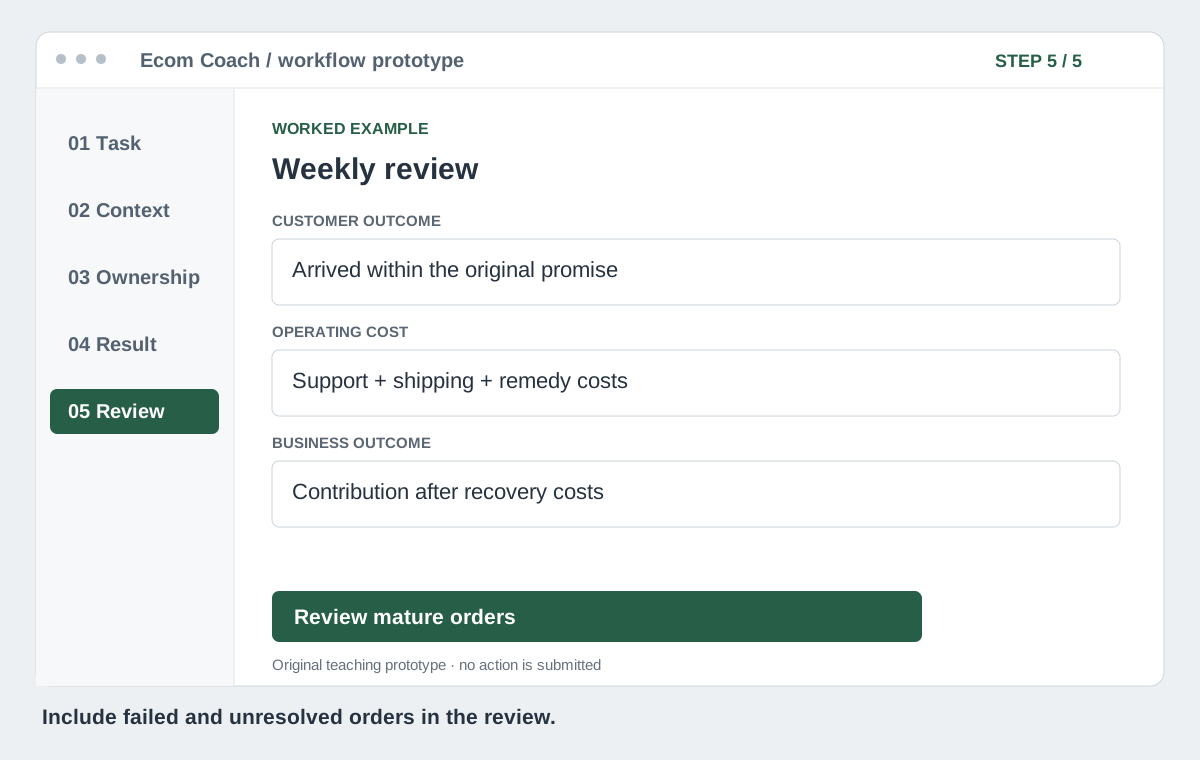
Test one change, such as making a supported delivery estimate visible before checkout. Use eligible carts as the conversion denominator and randomize exposure where feasible. Track completed purchases and contribution after shipping, support, refunds and replacements.
Separately measure delivered orders within the original promised window divided by all orders whose promised window has elapsed. Keep undelivered orders visible. For exception cases, track resolution, repeat contacts and recovery time. A higher checkout rate can still be a poor outcome if expensive promises create more failures.
For low-volume stores, begin with a manual review of consecutive orders and a usability test. Treat the findings as diagnosis, not established revenue lift.
Your first working session
Choose the product where timing matters most. Walk its purchase and exception paths with fulfillment and support. Fix one inconsistent promise, define one exception trigger and give one role responsibility for the response.
For the agent side of the journey, use our shopping-agent completion funnel. For the wider measurement method, read The handoff is the product. Better delivery communication starts with a promise the operation can keep and a recovery path people can use.
Sources and evidence
Ecommerce Growth Coaching · $750 / month
Two working sessions per month on one growth priority, with written next steps and one agreed artifact review.
Start with a free fit conversation. A written scope and payment instructions come before paid work begins.