Help customers make a considered purchase with useful proof, clear delivery, comparisons, consultations and transparent payment choices.
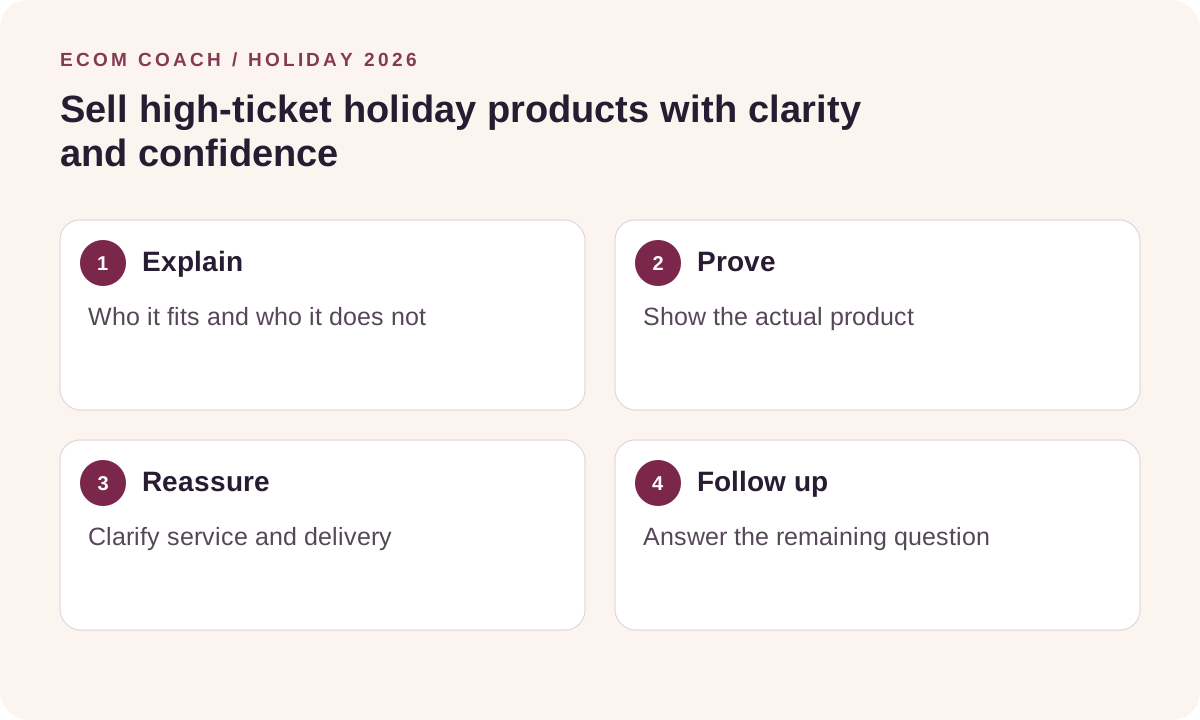
Holiday 2026 field guide. Start with the holiday growth center. Black Friday: November 27. Cyber Monday: November 30. Examples below are planning scenarios, not client results.
Expensive purchases need better decisions, not louder discounts
For furniture, jewelry, equipment or a premium gift, the buyer may need to understand fit, quality, authenticity, installation, warranty and total cost. Build the page around those decisions. “Luxury” is not a substitute for explaining materials, dimensions, craftsmanship or service.
Step 1: create a decision-ready product page
- Who it is for: describe the customer, use case and constraints honestly.
- What is included: itemize accessories, assembly, installation, service and anything sold separately.
- What it looks and feels like: use accurate photos, scale references, detailed views and a genuine demonstration.
- How to choose: compare the two or three nearest options and say when the cheaper one is enough.
- What happens after purchase: state realistic dispatch, delivery, inspection, returns and support procedures.
For made-to-order products, distinguish an estimate from a guaranteed holiday arrival. Confirm lead times with the supplier and fulfillment team. A carrier’s last-order guidance is not your store’s promise; your own processing time and the destination matter.
Step 2: give hesitation a useful destination
Offer a short consultation, video demonstration, sizing guide, material sample or written quote when appropriate. Ask only what is necessary to answer the buying question. A furniture customer might need dimensions and a doorway measurement checklist; an equipment customer may need compatibility guidance.
Example page structure: “Will it fit your space?” followed by dimensions and a measuring guide, “What arrives?” with an itemized list, “How delivery works” with the actual service level, and “Still deciding?” with a staffed contact option. Keep the purchase button available for confident buyers.
Step 3: design a premium offer with the cost included
Consider a useful accessory, setup help, gift presentation or a service upgrade you can fulfill. Cost it before making it free. Do not imply a warranty or return entitlement that your actual policy does not provide. Use real testimonials with permission and disclose relevant relationships.
If offering installments through an eligible provider, show the total product price alongside the payment option. Let the provider present current eligibility, interest, fees and repayment terms. Do not describe financing as free or universally approved. Include merchant financing fees and refund handling in your offer economics.
Step 4: follow up on the question, not just the cart
For a consenting prospect, a useful message might answer a compatibility question or link to the requested delivery information. Avoid repeated pressure after a person declines. Suppress purchasers from acquisition reminders and route complex questions to a knowledgeable person.
Use a longer and more honest measurement window
Track qualified inquiries, booked consultations, attended consultations, quote-to-order conversion, time to purchase, contribution and cancellations. A $2,000 product may not convert in the same session. Connect quotes and purchases without counting both as sales. Compare customers who have had the same time to decide.
Illustrative economics: a $1,200 order with $600 product cost, $150 delivery/installation and $80 other variable costs leaves $370 before acquisition. A 15% price discount removes $180 of revenue before any fee adjustment. If you add a service bonus instead, cost the actual labor and materials, not its advertised value. Use the order calculator before choosing the offer.
In the final week before Black Friday, improving the comparison, delivery explanation and response time may be more achievable than building a complicated new sales funnel. Start with the hesitation your real buyers mention most.
Download the free holiday action workbook or calculate your daily scorecard.
Store Growth Review · $750
Review one shopping journey, up to five pages, and leave with prioritized findings and a two-week action plan.
Start with a free fit conversation. A written scope and payment instructions come before paid work begins.